
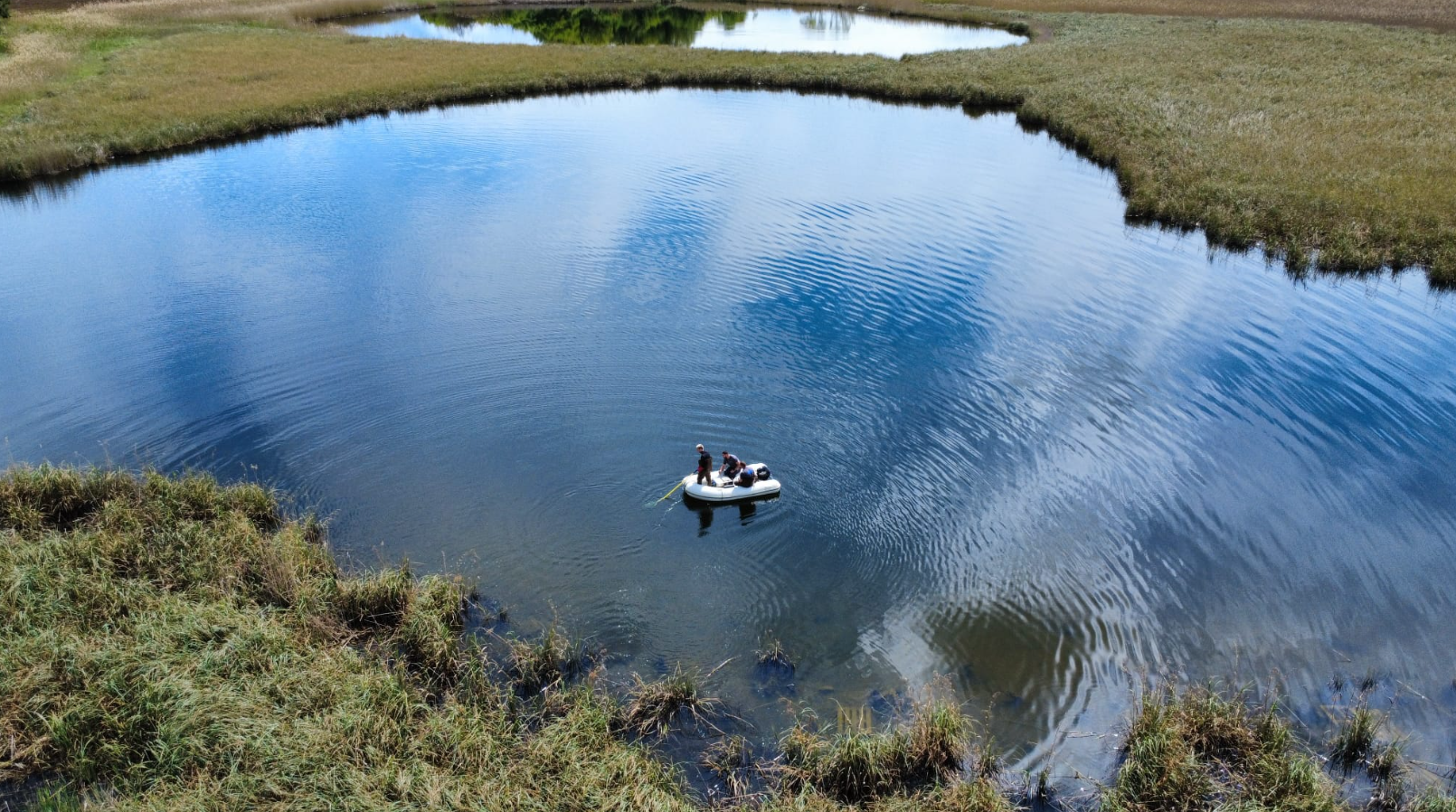
From 20 to 22 April 2026, activities to remove alien and invasive alien fish species were carried out in the Krka, Čikola and Vrba Rivers, as well as at Miloševo and Stipančevo Lakes.
This was the second action of this kind, and removal activities will continue throughout the project period, with the aim of reducing pressure from invasive species on sensitive freshwater ecosystems. On the Krka River, both nets and electrofishing were used, while at the other locations electrofishing only was applied. After capture, the fish were identified, measured, weighed, and properly disposed of in accordance with relevant procedures.
The activities involved ichthyologists from the Faculty of Science, University of Zagreb, staff from the project partner public institutions Nature Public Institution of Šibenik-Knin County and Sea and Karst Public Institution of Split-Dalmatia County, as well as employees of the Krka National Park Public Institution, the project’s lead institution.
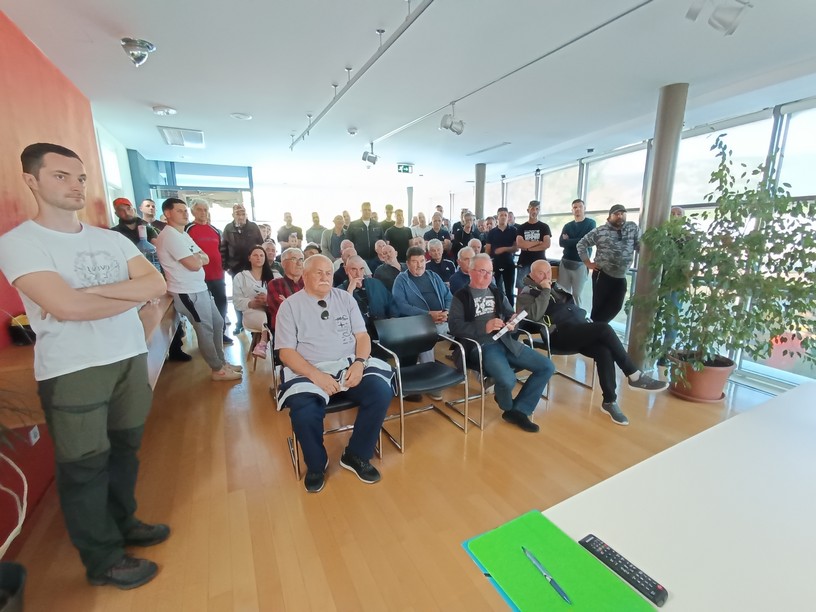
Following the field activities, the first educational workshop for local fishermen was held at the Krka National Park Public Institution’s branch office in Skradin, with more than sixty participants. The lecture was delivered by Prof. Davor Zanella, PhD (Faculty of Science, University of Zagreb). Local fishermen were introduced to the project objectives, selective fishing methods, and how to recognise alien and native fish species.
Workshop participants will receive a certificate enabling them to take part in the controlled removal of invasive species. They will also receive catch monitoring forms, supporting the systematic reduction of invasive fish populations and continuous monitoring. Until the end of the project, the training will be delivered once per year.
The ReFresh Fish LIFE project, funded by the European Union through the LIFE Programme and running until 2030, aims to improve the conservation status of five endemic and threatened freshwater fish species in Šibenik-Knin and Split-Dalmatia Counties.
Removal activities target alien and invasive species such as pike, European perch, common carp, Prussian carp, and eastern mosquitofish, which pose a major threat to native species. Special attention is dedicated to protecting the project’s five target species: the Visovac goby, Dalmatian minnow, Dalmatian barbelgudgeon, Tursky’s dace, and Dinaric minnow—globally rare species whose distribution is largely limited to these Natura 2000 sites.
Alongside removal and monitoring, a key project component is training local fishermen in selective fishing techniques and species identification. This strengthens long-term ecosystem protection through the active involvement of the local community, which is one of the project’s main goals.
Photos by: Krka National Park Public Institution